.png)
How Long Does It Take to Replace a Missing Tooth and What Examinations and Planning Are Involved?

Losing a tooth can affect your appearance and self-confidence, as well as the function of your mouth. Many people wonder how long it takes to replace a missing tooth and what steps are involved to ensure a successful treatment.
In this article, we will explain the stages of replacing a missing tooth in detail, starting with examination and treatment planning, followed by tooth extraction and bone grafting when necessary, and finally the placement of the permanent crown. We will also explain when immediate tooth replacement may be possible.
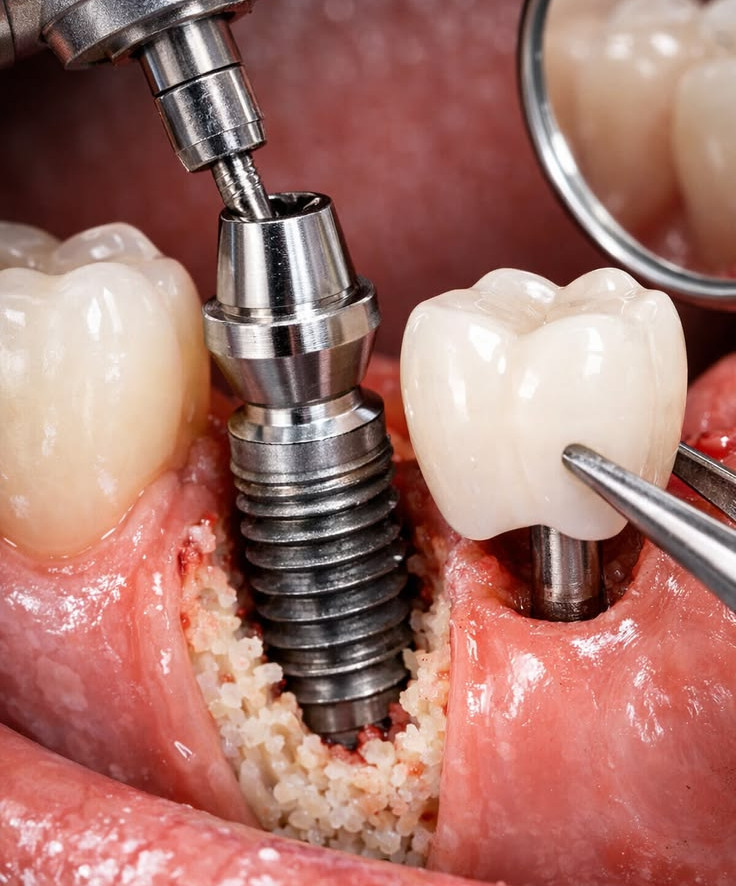
Examination and Planning Before Tooth Replacement
The first step in replacing a missing tooth is a thorough examination and careful treatment planning. Your dentist will evaluate the condition of your mouth, teeth, and surrounding tissues. X-rays or 3D imaging may be used to determine:
The amount and quality of bone at the missing tooth site
The condition of the gums and surrounding tissues
Any infections or health conditions that could affect the success of treatment
This examination helps determine the most suitable replacement option, whether it is a dental implant, dental bridge, or removable prosthesis. Proper planning reduces potential risks and improves the chances of successful treatment.
Tooth Extraction When Necessary
In some cases, the missing tooth may be associated with an existing dental problem, such as severe decay or an infection affecting the tooth roots. In these situations, the dentist may need to remove the remaining tooth or root fragments before beginning the replacement process.
Recovery after extraction varies from person to person, but the gums may generally need around one to two weeks to heal sufficiently before the next stage.
Bone Grafting When Needed
If the bone at the missing tooth site is weak or insufficient, your dentist may recommend bone grafting. This procedure aims to build a strong foundation that can support a dental implant.
Bone grafting requires a healing period, often around 3 to 6 months, depending on the amount of bone graft material used and the individual patient's condition. During this period, the dentist monitors the healing process and determines when the bone is ready for implant placement.
Implant Healing Time
Once the bone is ready, the dental implant is placed. The implant acts as an artificial tooth root and needs time to heal and integrate with the surrounding bone.
This process is known as osseointegration, during which the bone gradually bonds securely with the implant.
The healing period can take approximately 3 to 6 months, depending on the individual case. This is an important stage for the long-term success of the dental implant.
During this period, it is important to avoid excessive pressure on the implant and carefully follow your dentist's instructions.
Crown Placement
Once the implant has become stable and the dentist confirms that healing is progressing properly, the final dental crown can be placed. The crown represents the visible part of the replacement tooth and is usually made from durable materials such as porcelain or ceramic.
The crown process may require several appointments, including taking precise measurements, creating the crown in a dental laboratory, and then placing and adjusting it to ensure proper comfort, appearance, and function.
When Is Immediate Tooth Replacement Possible?
In some cases, immediate tooth replacement may be possible. This means that the dental implant and temporary crown can be placed during the same appointment or within a very short period.
This option may be considered when the patient has sufficient healthy bone, good gum condition, and no active infection or other factors that could interfere with healing.
Immediate tooth replacement can significantly reduce treatment time, but it requires careful evaluation and appropriate clinical expertise to determine whether it is suitable for the individual case.
Important Tips When Replacing a Missing Tooth
Follow your dentist's instructions carefully after every stage of treatment.
Maintain excellent oral hygiene to reduce the risk of infection.
Attend regular follow-up appointments to monitor the progress of your treatment.
Avoid harmful habits such as smoking, which can negatively affect implant healing.
How Long Does Tooth Replacement Take?
The total time required to replace a missing tooth depends on several factors, including the condition of the bone, whether bone grafting is required, and how quickly the implant heals.
In general, the complete process may take approximately 3 to 9 months, although the timeline can vary significantly from one patient to another.
Proper examination and treatment planning are essential for achieving successful results. Your dentist will determine the most appropriate treatment timeline based on your individual needs.
If you are considering replacing a missing tooth, schedule a consultation with a dental professional for a thorough evaluation and a treatment plan tailored to your condition.
The right tooth replacement can restore your smile, improve your confidence and chewing function, and help maintain your long-term oral health.


Comments